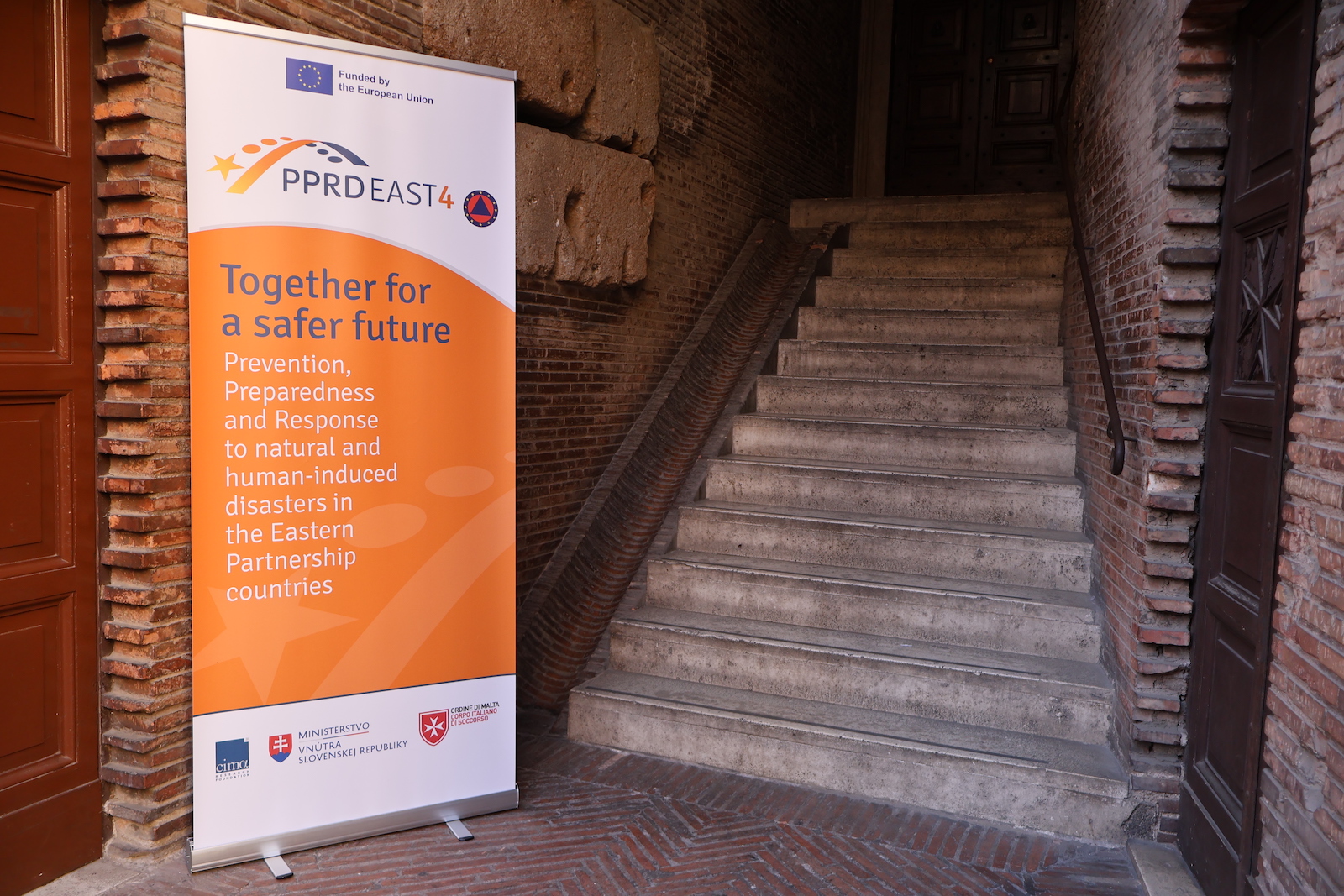

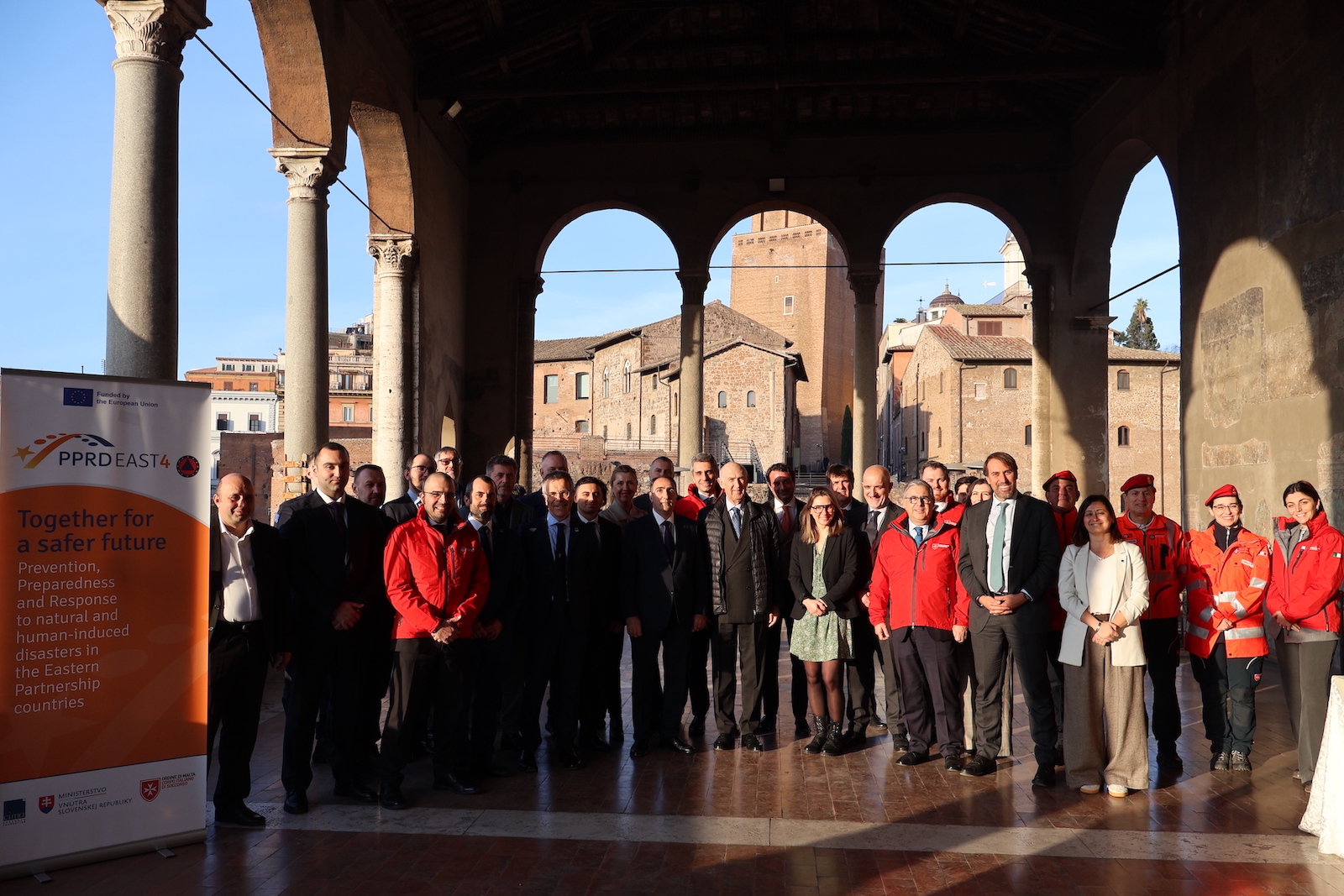
Now underway is the European programme Prevention, Preparedness and Response to Natural and Human-Induced Disasters in the Eastern Partnership countries – Phase 4 (PPRD East 4), funded by the European Union, coordinated by the CIMA Foundation and aimed at strengthening the prevention, preparedness and response to disasters of natural and anthropogenic origin in the Eastern Partnership countries.
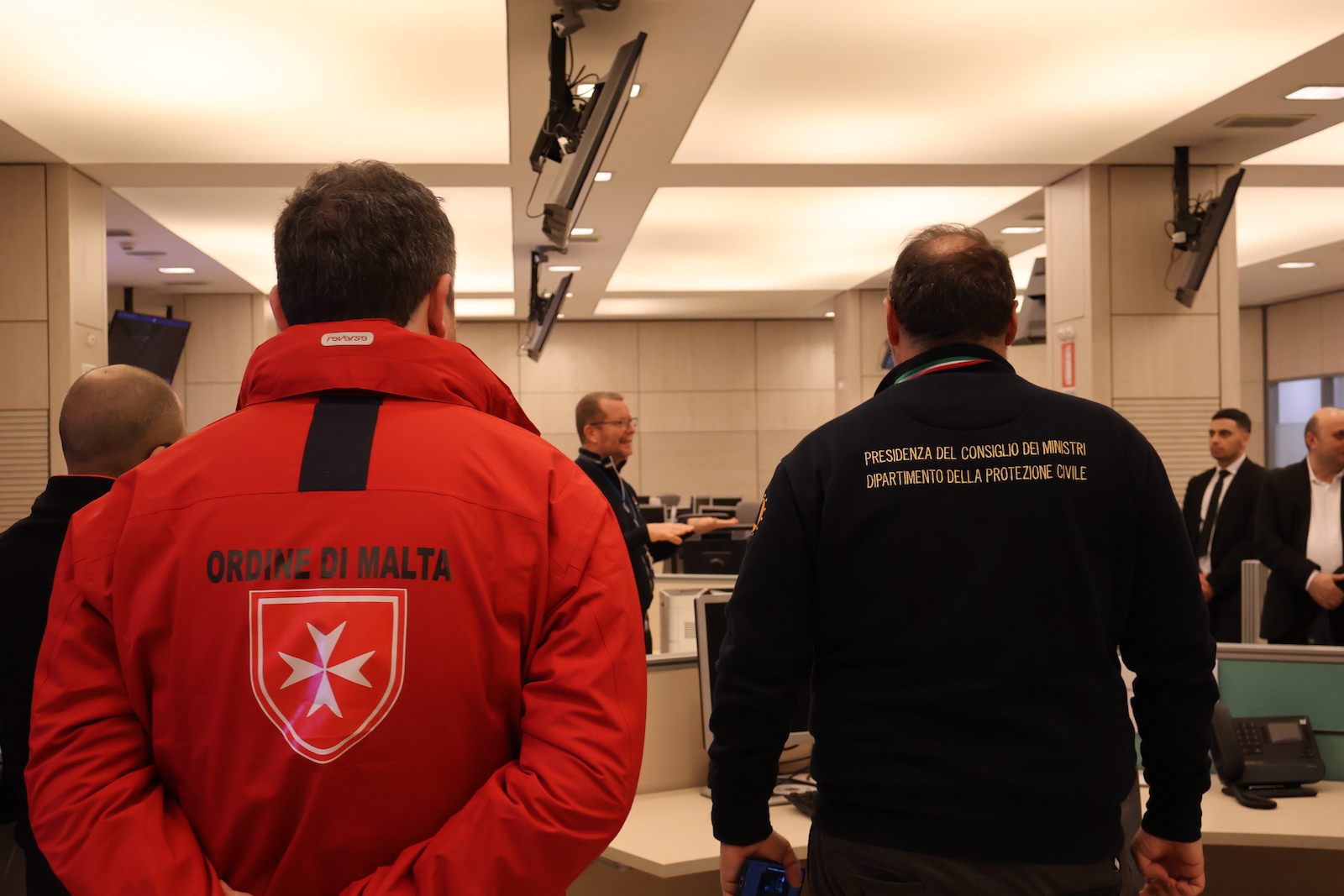
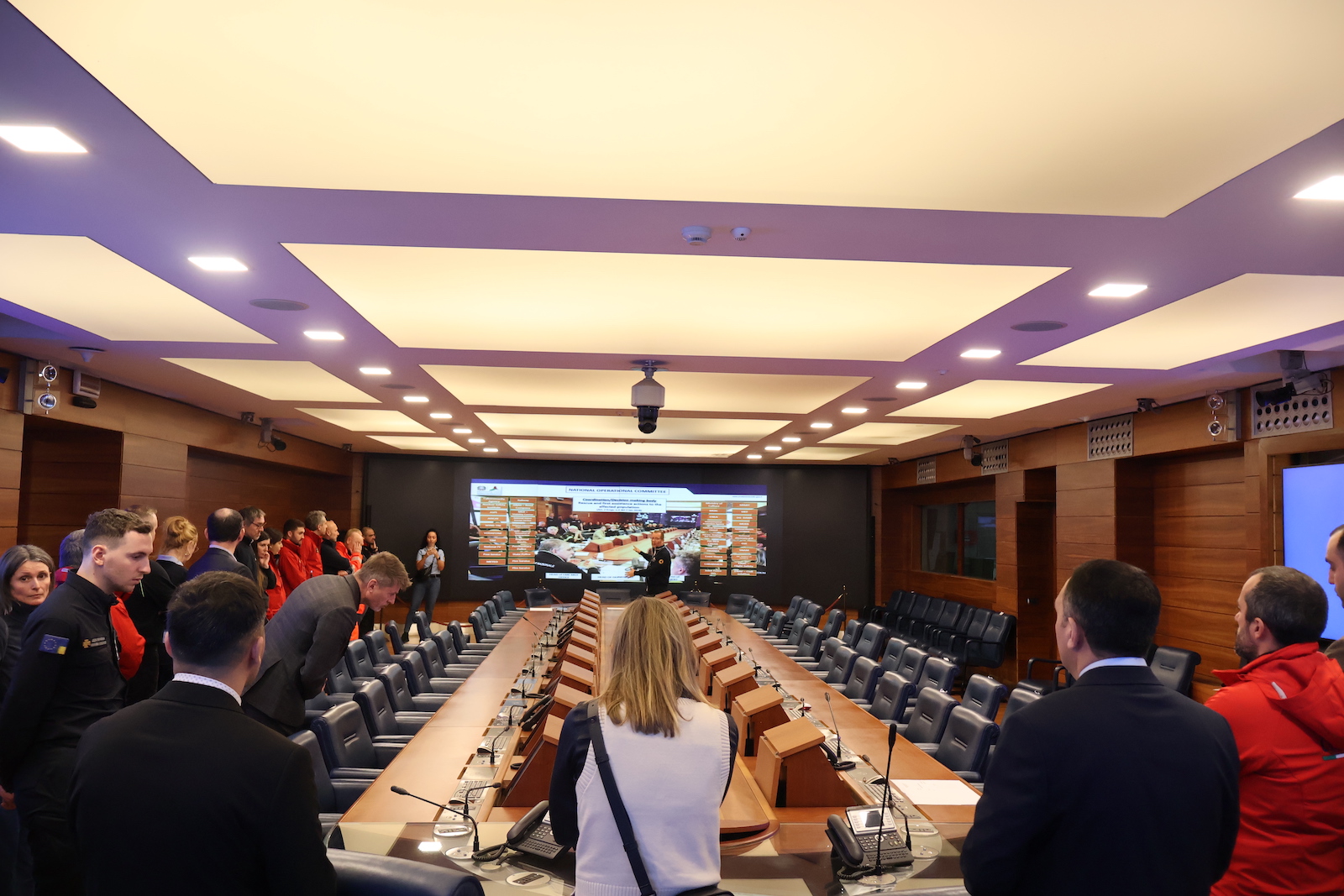
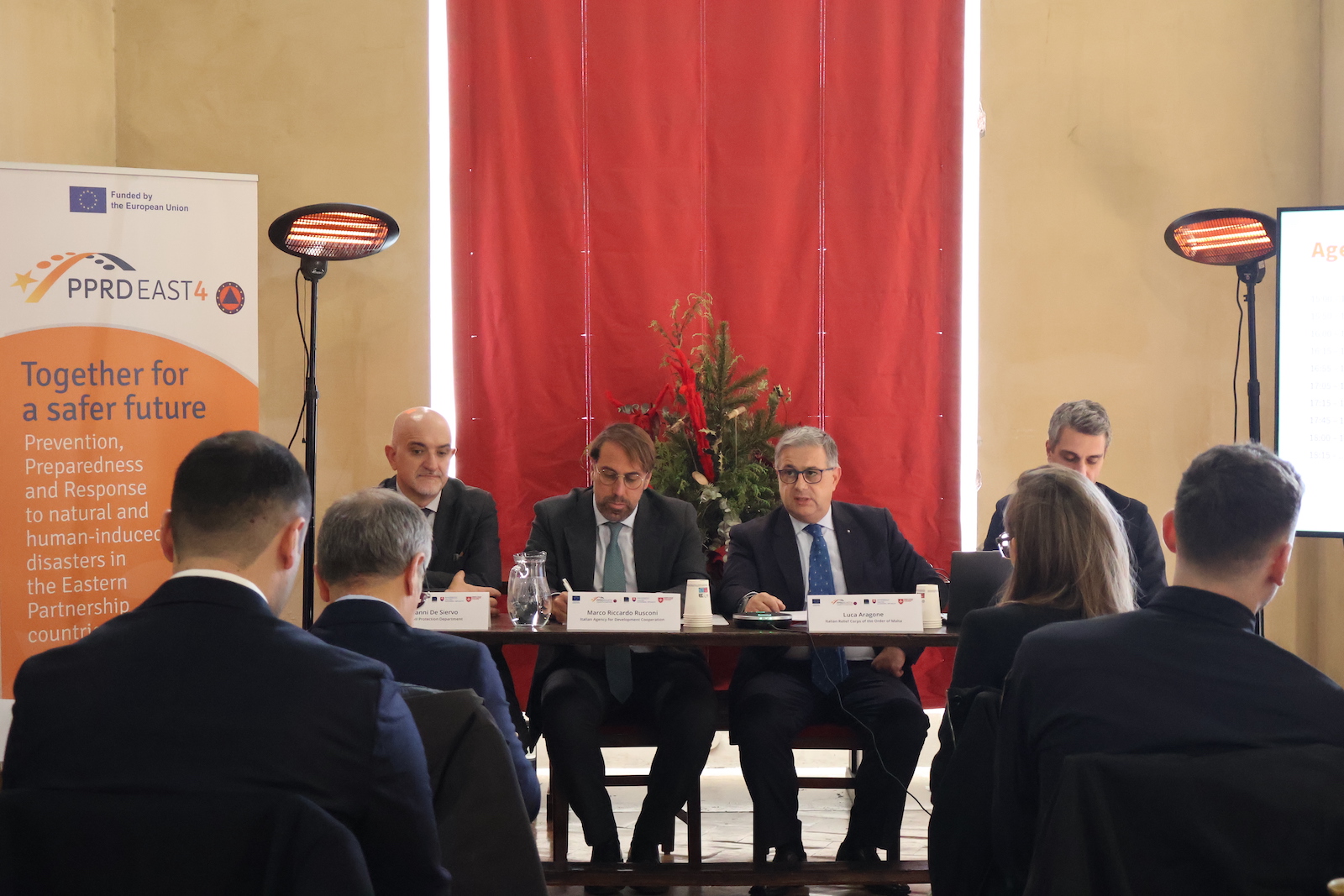
The programme’s Kick-off Meeting took place in the Casa dei Cavalieri di Rodi, seat of the Italian Association of Knights of Malta and the Italian Relief Corps of the Order of Malta (CISOM), confirming CISOM’s central role within the programme and its historic commitment to civil protection and emergency management. The meeting was spread over two days: the first was dedicated to presenting the objectives, governance, areas of intervention, and implementation roadmap, with direct debate between European partners and beneficiary countries; the second was characterized by an institutional visit to the Department of Civil Protection and the first Steering Committee, aimed at strengthening operational coordination and cross-border cooperation.
PPRD East 4 promotes structured regional cooperation, encouraging the progressive rapprochement of partner countries with the European Union Civil Protection Mechanism (UCPM). The fourth phase of the programme is the conclusion of a path started in 2010, marking the transition from the definition of institutional models to their concrete application in the territories.
During the work, the Vice-President of the Italian Relief Corps of the Order of Malta, Luca Aragone, stressed the strategic value of the programme for the integration between emergency preparedness and crisis response: «The programme is crucial to support the integration of emergency preparedness and crises, acting as a bridge between humanitarian aid and national emergency management. This is an important opportunity to broadly analyse the concept of vulnerability.»
The contribution of CISOM fits fully into the vision of the programme, which aims to ensure national risk management systems through shared operational tools, consolidated warning systems and multi-risk and inclusive contingency plans. Particular attention is paid to developing sustained capacity, including training programs focused on the Training of Trainers, command post exercises and large-scale simulations, involving institutions, scientific communities, and structured volunteer organizations.